 Comic
Comic
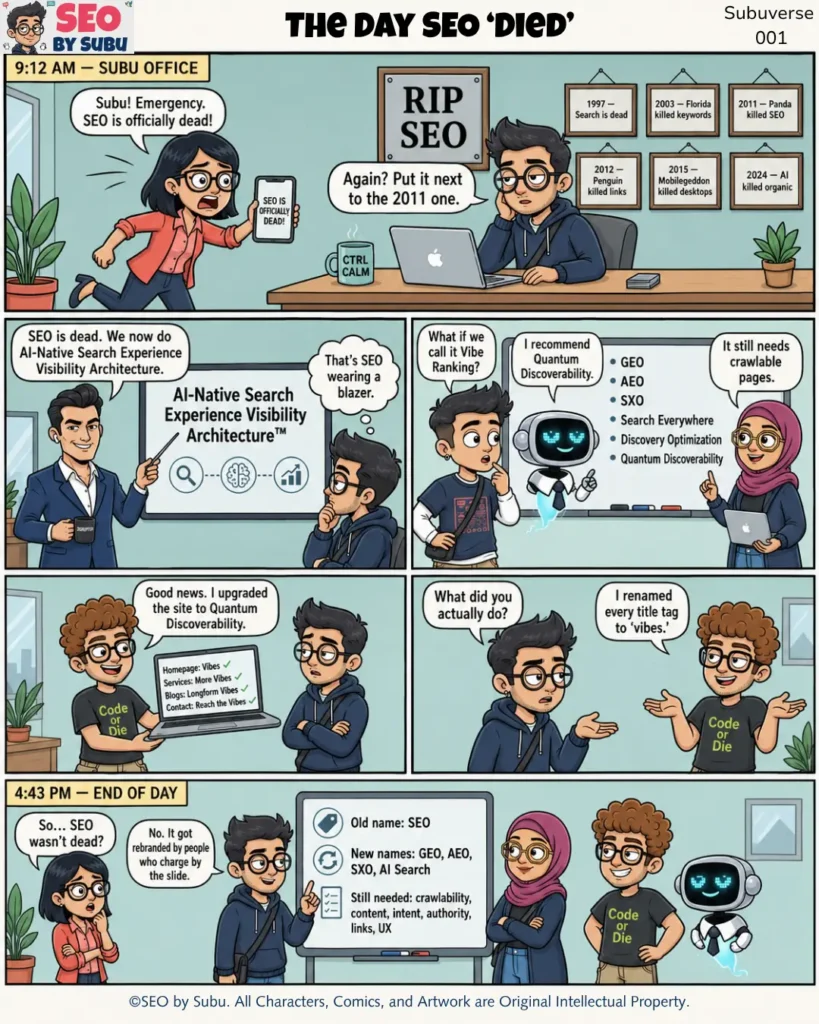
The Day SEO ‘Died’
June 11, 2026
Comics about SEO chaos. Guides that actually move rankings. Consulting from someone who’s been in the trenches since 2012.

“Just another day in SEO paradise...”
New here? → Meet Subu and the full cast
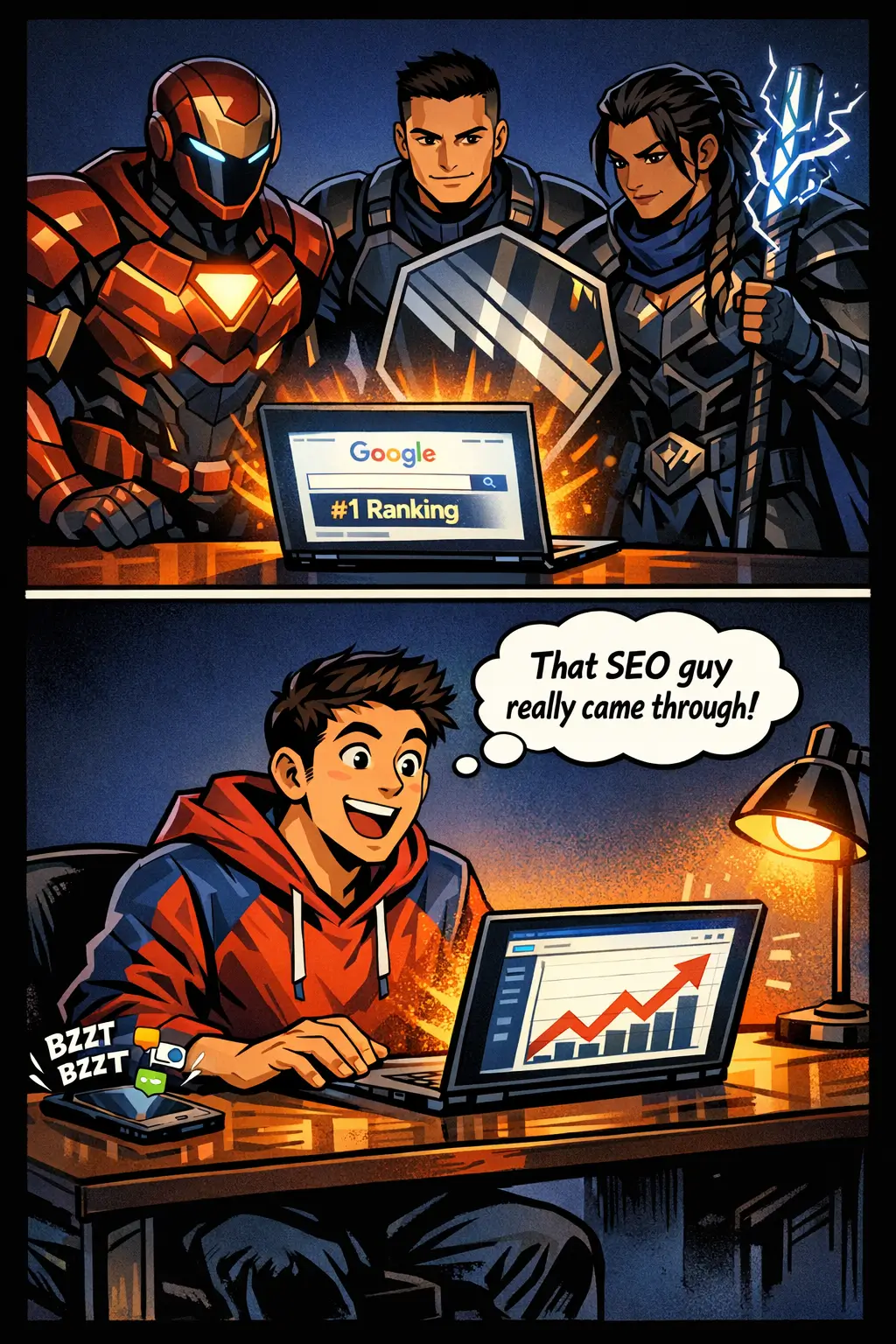
When the Avengers need to find a hero, they don’t use a Stark Satellite—they Google. That #1 ranking on the laptop screen? That’s me proving Peter’s neighborhood status wasn’t luck; it was a perfectly executed strategy.
While Peter has Spider-Sense, I use 14 years of data to build the technical architecture and content authority that survives any algorithm “Snap.” I don’t just rescue failing traffic; I build the Strategic Infrastructure needed to scale it to new heights.
“Kid’s got a better search strategy than Stark Industries.” — Tony Stark
The Bottom Line: No magic or Multiverse glitches. Just a Delhi-based expert mastering every layer of the search funnel. I fix what’s broken and build what scales, using 14+ years of expertise and far too much coffee.
Because Google doesn't rank your feelings. Real playbooks from someone who's used every tactic on live sites. Pick your poison.
Yeah, we practice what we preach. Shocking, right? Here’s proof we actually know SEO.
 General SEO
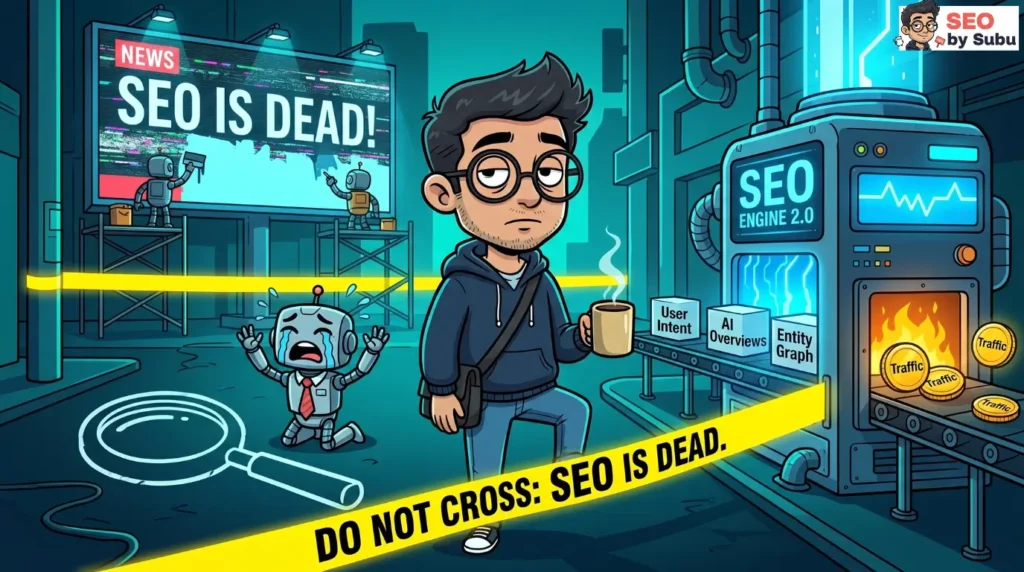
Here’s the thing about declaring SEO dead: it’s basically a tradition at this point. SEO was born in July 1997 when a spammer used…
Read Post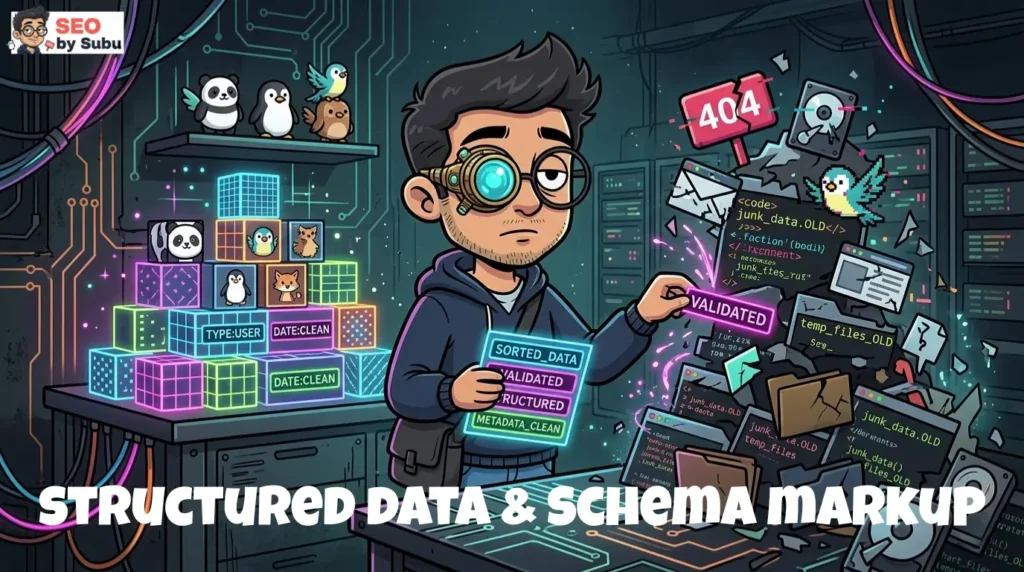 Technical SEO
Two articles. Same topic. Same search intent. Similar content quality. One shows up in Google with star ratings, a publication date, an author name,…
Read Post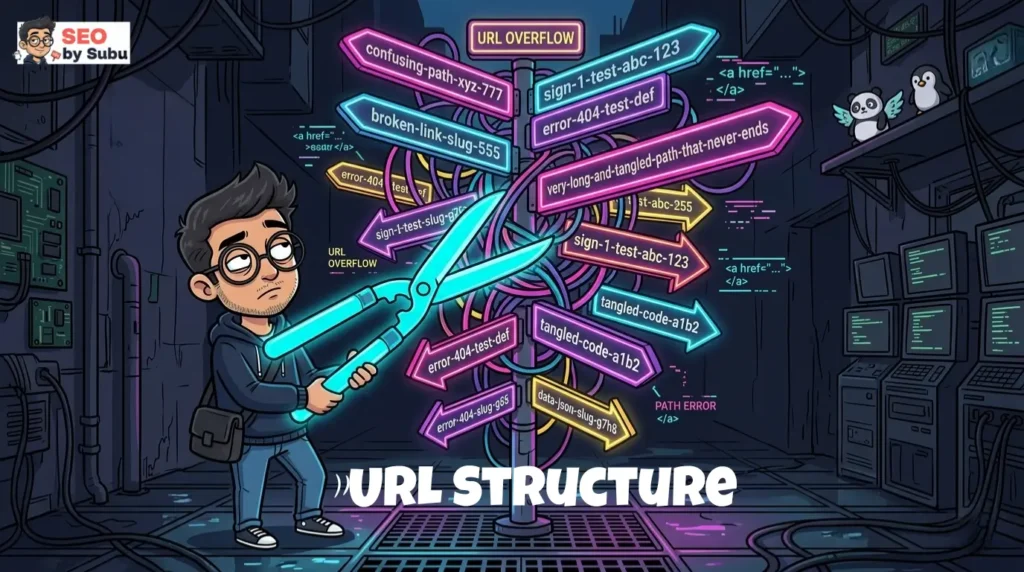 Technical SEO
Two URLs. Same website. Same content. Same page, effectively. Tell me which one you’d click. Tell me which one Google trusts more. Tell me…
Read PostDepends on what's broken. If it's crawl issues, content gaps, keyword cannibalization, thin pages, toxic backlink profiles, or a site Google simply doesn't trust — yes, that's the exact mess Subu untangles for a living. If you're looking for someone to promise Page 1 in 30 days, that's not here. What is here: honest diagnosis, a clear plan, and execution that's been tested on real sites since 2012.
→ See what that looks like on the Portfolio page.
The honest answer nobody gives you: it depends on where you're starting from. A technically broken site with zero authority needs 3–6 months before organic traffic moves meaningfully. A site that's already indexing well but underoptimized can see shifts in 6–10 weeks. Subu will tell you exactly what to expect after the first audit — no vanity metrics, no manufactured urgency.
It starts with a full audit — technical, on-page, content, and competitive. From there, you get a prioritized roadmap, not a 40-slide deck you'll never open again. Execution happens in phases: fix the foundation first, then build content and authority. You get regular updates, plain-English reporting, and someone who actually explains why something is being done — not just that it is.
→ Questions before committing? Drop a line here.
No. Subu has worked with bootstrapped startups, solo founders, niche consultants, and mid-sized businesses. The scope changes based on budget — a smaller engagement might focus purely on technical fixes and a 3-month content plan, while a larger one covers the full stack. What doesn't change: the quality of thinking behind the work. Reach out with your URL and goals — you'll get a straight answer on whether it makes sense.
Because Subu shows the work. No mystery deliverables, no proprietary "algorithm" nobody can explain, no lock-in contracts that keep billing you while rankings flatline. Every recommendation comes with a reason. Every report shows what moved, what didn't, and what comes next. The portfolio exists precisely so you can see what past work looks like before deciding anything.
→ See the case studies and make your own call.
Yes. The site is based in India, the SEO is global. Subu has worked with clients targeting audiences in the US, UK, and across South and Southeast Asia. Time zones are manageable — most client communication happens async anyway, which means you get thoughtful responses instead of rushed calls.
More than ever — and also differently than before. AI Overviews and LLM-based search have changed how visibility works, not whether it matters. Sites with strong E-E-A-T signals, well-structured content, and real topical authority are the ones getting cited in AI responses. The sites cutting corners on content and technical SEO are disappearing faster. So yes, SEO is worth it — but the playbook has evolved. Subu's AI Search guide covers exactly how.
Primarily website SEO — technical, on-page, content strategy, local, and e-commerce. YouTube SEO shares principles (keyword research, metadata, watch-time signals) but is its own discipline. If your goal is cross-channel visibility with YouTube as a component of a broader content strategy, that's a conversation worth having. If you need a dedicated YouTube-only engagement, Subu will tell you upfront whether it's the right fit.
Yes — and ecommerce SEO is one of the most technical and high-stakes areas Subu works in. Product pages, category pages, faceted navigation, duplicate content from filters, crawl budget waste, schema for products and reviews — it's a different beast from a regular content site. The goal isn't just traffic. It's traffic that buys.
→ See the E-Commerce SEO Playbook for what this looks like in practice.
Absolutely. Shopify is a solid platform for SEO — but it comes with its own set of quirks: duplicate URLs from collections, limited control over certain redirects, bloated app scripts that hurt Core Web Vitals, and product schema that's often incomplete out of the box. Subu has worked on Shopify stores and knows exactly where the platform helps you and where it quietly creates problems you don't notice until rankings drop.
Local SEO is one of the highest-ROI SEO investments a local business can make. Ranking in the Google Maps pack and local organic results means you're visible exactly when someone in your area is actively looking for what you offer. Google Business Profile optimization, local citations, location-specific content, and review signals — these are all very fixable, very measurable, and very impactful for local businesses.
→ Subu's Local SEO Blueprint breaks down the full approach.
Yes — but JavaScript-heavy sites need extra attention. If Google can't render your JS properly, your content simply doesn't exist in search. Common issues include: content that loads client-side and never gets indexed, missing titles and H1s on dynamic pages, and hreflang tags that render too late. Subu checks rendering, uses Google's URL Inspection tool to verify what's actually indexed, and fixes the gaps between what your site looks like in a browser and what Google actually sees.
Subu starts with crawlability, indexation, canonicalization, internal linking, and Core Web Vitals before touching content. If Google can’t discover, render, and trust the site, everything else is noise. The job is to remove friction first, then build authority.
E-E-A-T still matters even when the site isn’t in health or finance. Subu builds it through visible authorship, experience-led content, clean site structure, proof of work, and pages that clearly show who made them and why they should be trusted.
AI search changes the surface area of visibility, not the need for strong SEO fundamentals. Subu focuses on structured content, entity clarity, topical depth, and trust signals so content is more likely to be cited or summarized well in AI systems.
Yes. JS-heavy sites need extra care around rendering, metadata, indexability, and whether content is actually visible to Google. If the important stuff only exists after client-side rendering, Subu treats that as a technical SEO problem, not a content problem.
Subu focuses on category architecture, internal linking, faceted navigation, duplicate control, product schema, and crawl waste. Ecommerce SEO is less about “writing more” and more about making the site easier for search engines to understand and users to buy from.
Shopify is ecommerce SEO with platform-specific constraints. The strategy is the same, but implementation changes because of app bloat, URL structure, theme limitations, and duplicate content issues from collections and filters.
Subu treats local SEO as a combination of relevance, prominence, and proximity signals. That means Google Business Profile optimization, location pages, reviews, citations, and local intent content that actually matches how nearby customers search.
The stack changes by project, but the priorities don’t: crawling, auditing, GSC, analytics, and page-level validation. Subu uses tools to verify what Google sees, not to decorate reports.
Whenever search behavior or search systems materially change. Subu keeps the guides tied to live-site experience, so the resources evolve when the playbook changes — not when the content calendar says so.
Yes. The guides are written to be usable, not just readable. If a workflow or checklist helps you fix a client site faster, that’s the point.
Subu is the exhausted but functional SEO professional at the center of this universe — the guy who survives Google updates, client chaos, and broken dashboards with coffee, sarcasm, and enough competence to keep the rankings from collapsing.
The Subuverse is the comic universe where SEO problems become characters, punchlines, and daily disasters. It’s where the absurdity of search, clients, algorithms, and office life all gets turned into stories people in the industry actually recognize.
More than 10, and the cast keeps growing. Some characters are recurring, some are chaos agents, and some exist purely to make Subu’s life harder.
Emotionally, yes. Legally, no comment. The situations are inspired by real SEO problems, real client dynamics, and the general experience of trying to make search engines behave.
Not at all. SEO people will feel the pain more directly, but the humor works for anyone who has dealt with bad software, impossible deadlines, or someone who says “can’t you just make it rank?”
As often as Subu’s sanity allows. The goal is to keep the strip universe active, current, and regularly updated with new SEO disasters and character-driven chaos.
Yes — and you absolutely should. If a strip makes you laugh, cringe, or screenshot it for your team, that means it did its job.
For sharing, yes. For reuse in commercial material, ask first. The comics are part of the SEO by Subu brand universe, and anything beyond casual sharing should be checked properly.
Because he is. The character is designed to look like someone who has survived too many ranking drops, too many “quick calls,” and too many clients who discovered SEO yesterday.
Yes. Each character has a defined role, temperament, and way of making trouble. That consistency is what makes the Subuverse feel like an actual world instead of random strips.